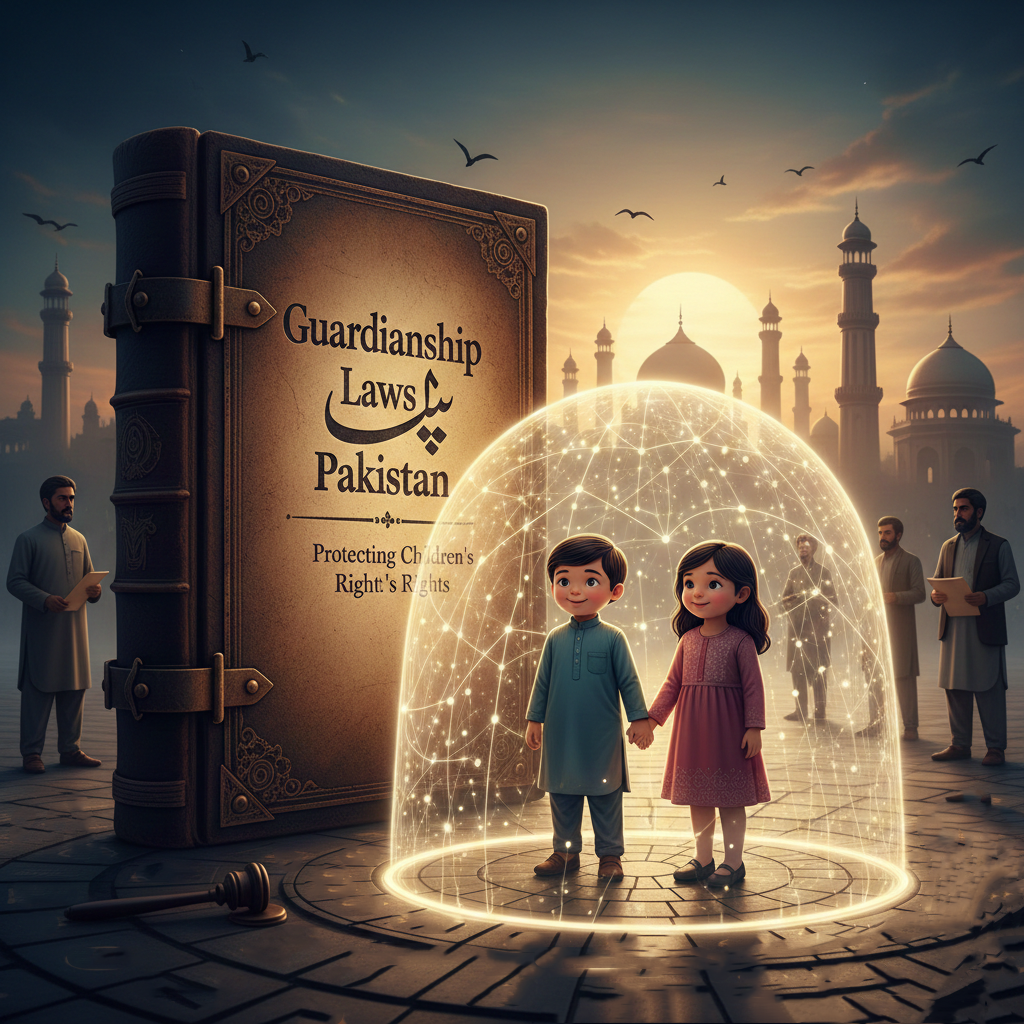
Guardianship laws in Pakistan are a crucial component of the legal system, designed to regulate the care, custody, and management of minors’ persons and property. These laws aim to safeguard the welfare of children while balancing parental rights, societal norms, and Islamic principles.
Guardianship in Pakistan is primarily governed by the Guardian and Wards Act 1890, which applies to all citizens, supplemented by Islamic law for Muslims, particularly regarding personal status, custody, and guardianship arrangements. The primary objective of these laws is to ensure that children receive proper care, protection, and guidance in an environment conducive to their development.
Under the Guardian and Wards Act 1890, a guardian may be appointed by the court for minors who are unable to manage their own affairs, particularly in cases where parents are deceased, unfit, or incapable. Courts have the power to determine guardianship of the person (custody) as well as guardianship of property (management of assets) based on the best interests of the child.
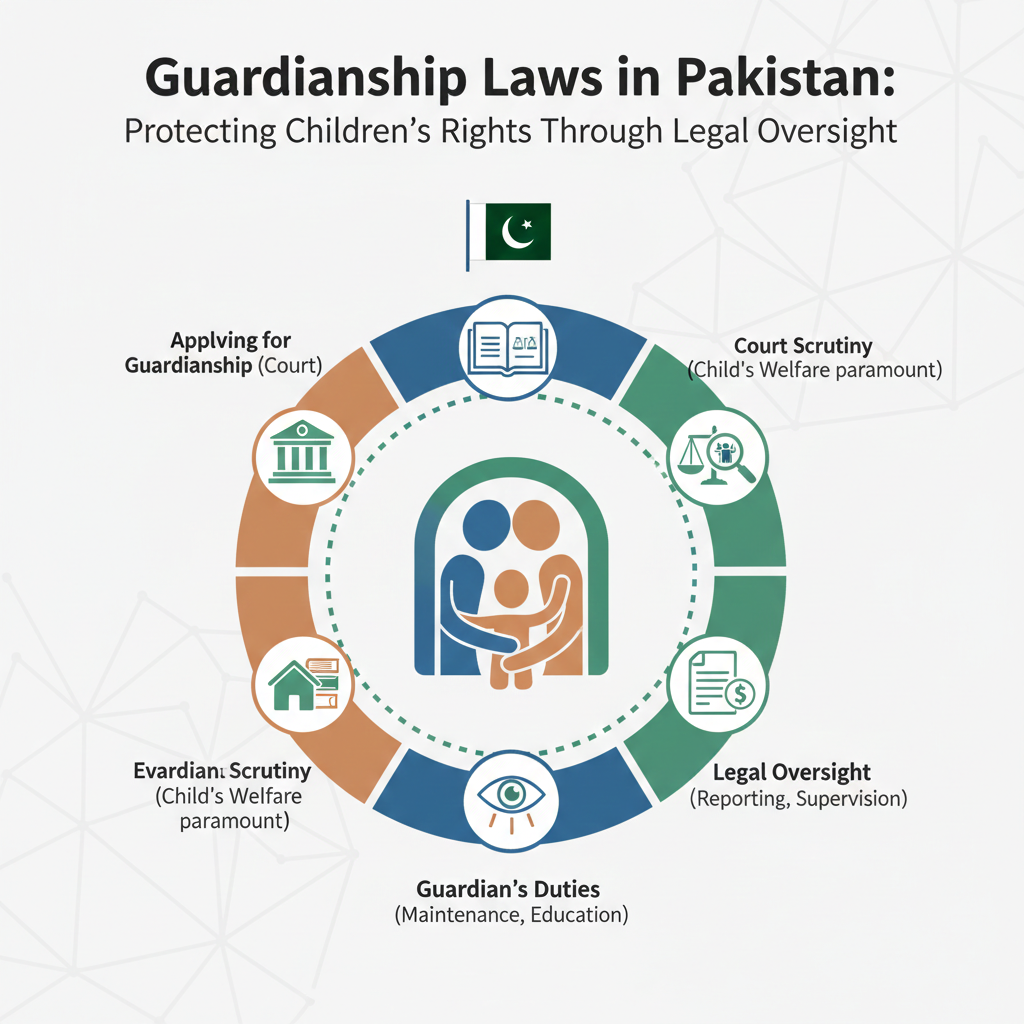
The law empowers courts to make orders regarding the welfare, education, maintenance, and general upbringing of children, ensuring that guardians fulfill their responsibilities ethically and legally.
Islamic principles also play a central role in guardianship laws for Muslim children. While custody (Hizanat) often remains with the mother for young children, especially daughters, guardianship of property and decision-making powers (Wilayat) typically rest with the father or appointed male guardian. Courts consider both statutory provisions and Shariah principles when adjudicating disputes, particularly in cases involving divorced parents.
Several landmark judgments have shaped guardianship laws and clarified the rights of children and parents in Pakistan. In Syeda Parveen vs. Malik Amir (PLD 1992 SC 721), the Supreme Court emphasized that the welfare of the child is the paramount consideration, overriding parental preference or gender bias.
Similarly, in Mst. Farzana vs. Muhammad Iqbal (PLD 2004 Lahore 201), the Lahore High Court highlighted that courts must assess the child’s living environment, education, and emotional well-being when deciding custody. These judgments reinforce the principle that the child’s best interest takes precedence over other considerations, including societal pressures or parental convenience.
Another significant case is Mst. Nighat Bibi vs. Muhammad Yousuf (PLD 1998 SC 104), in which the Supreme Court clarified that guardianship decisions should be flexible and responsive to changing circumstances in the child’s life, including age, health, and educational needs. The court held that temporary custody orders could be modified to reflect the evolving best interests of the minor.
In addition to custody, guardianship of property is also critically addressed in Pakistani law. Courts supervise management of minors’ property to prevent exploitation or mismanagement. In Muhammad Rafique vs. State (PLD 1998 Lahore 44), the Lahore High Court ruled that guardians entrusted with a minor’s estate have a fiduciary duty to manage the property diligently and in accordance with the child’s welfare, reinforcing accountability in guardianship.
Modern challenges in guardianship law include disputes arising from divorce, remarriage, polygamy, and blended families. Courts frequently mediate between parents to ensure continuity of care, especially in cases where one parent is deemed unfit or absent. Legal reforms and family court systems have enhanced procedural efficiency, allowing for faster and more equitable resolution of guardianship disputes.
The establishment of family courts in provinces such as Punjab and Sindh has facilitated access to justice for children and guardians alike, ensuring that legal decisions are child-centered rather than adversarial.
In conclusion, guardianship laws in Pakistan combine statutory regulations, Shariah principles, and judicial oversight to protect the welfare of minors. Landmark judgments have emphasized that the best interest of the child remains the guiding principle in all guardianship matters. While legal frameworks exist, challenges in implementation persist due to societal norms, lack of awareness, and resource constraints.
Strengthening family courts, enhancing legal literacy, and ensuring timely judicial intervention are crucial steps toward ensuring that every child in Pakistan receives appropriate care, protection, and opportunities for holistic development under effective guardianship.
Zafar Rahim Sukhera
Advocate High Court Ex-Assistant Advocate General Punjab